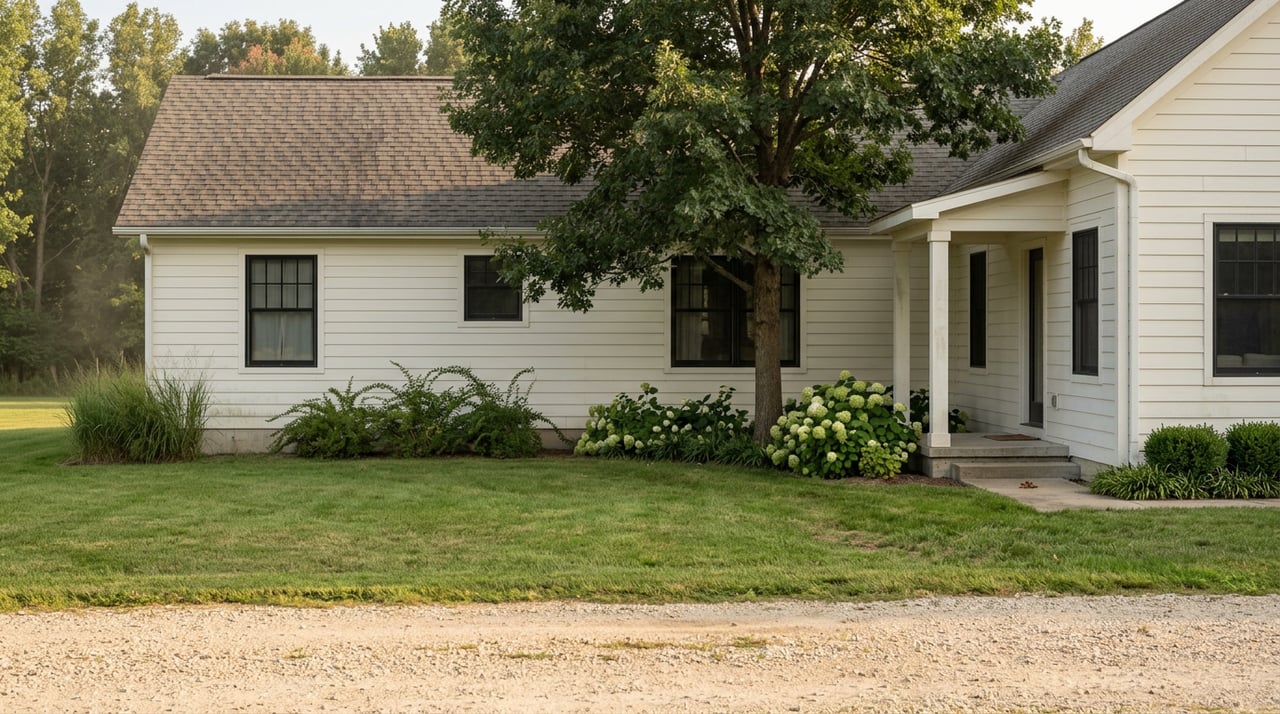
The title commitment lands three days before closing, and there it is: a line about a "reservation of oil, gas, and mineral rights" that nobody mentioned during the showing. The buyer calls their agent. The seller says they had no idea their grandparents ever leased anything. The title company says this happens more often than people think, and in Guernsey County, that is not an exaggeration.
Cambridge sits in the part of Ohio where the ground itself has a paper trail. Understanding that trail before you sign anything can save you a week at the closing table, or worse, a surprise after you already own the place.
Why this shows up here more than most Ohio counties
Guernsey County ranks fifth statewide in overall oil and gas production and first in the state for total oil production, with roughly 349 active wells among more than 6,200 that have been drilled here over the years, according to industry production data. The county accounts for close to a third of all oil produced in Ohio. That history did not stay confined to farm fields outside town. It runs under subdivisions, acreage parcels, and older homes throughout the area, because for well over a century, landowners here have leased, sold, or split off their mineral rights separately from the land above them.
That separation is called severance, and it is the reason a house in Cambridge can carry a more complicated title history than a comparable house in a county without the same drilling past.
What "severed" actually means for a buyer or seller
When mineral rights are severed, the person who owns the surface, the house, the yard, the driveway, does not necessarily own what is underneath it. A previous owner may have sold or leased those rights decades ago, sometimes for a modest sum, sometimes without any of the current owner's family ever hearing about it again.
Guernsey County has a real example of how tangled this can get. A case that reached the Seventh District Court of Appeals, Tucker Irwin, involved 108 acres in the county where mineral rights had been transferred to another party back in 1965. The surface owner tried to reclaim those rights decades later, and the other party argued they had never received proper notice that anyone was trying to take them back. Cases like this are exactly why a title search on an older Guernsey County property takes real work rather than a quick database check.
The twenty-year clock nobody explains
Ohio has a mechanism for handling minerals that sat unused for decades: the Dormant Mineral Act, first passed in 1989 and revised in 2006. The idea is straightforward. If a mineral rights holder has not leased, drilled, collected royalties, or otherwise used those rights for twenty years, the surface owner can potentially reclaim them. In practice, doing that correctly means notifying the mineral holder, filing the right affidavit, and waiting out required response periods. Skip a step, and you can end up in the same position as the Tucker Irwin case: a legal fight over who actually owns what is under the yard.
For a buyer, the practical takeaway is simple. If a title commitment shows a mineral reservation with no clear resolution, that is not paperwork to sign around. It is a question worth answering before closing, not after.
What the minerals themselves might be worth
Not every severed mineral interest matters equally, and the value swings depend heavily on whether there is any activity attached to it. Industry pricing guidance for this part of Ohio breaks it down roughly like this:
| Mineral Status | Typical Value Range |
|---|---|
| Unleased, no nearby drilling activity | Under $500 to $3,000 per acre |
| Leased but not yet producing | $500 to $5,000 per acre |
| Producing, with active royalty payments | Often valued near 50 times the monthly royalty check |
These are industry rules of thumb, not appraisals, and they move with commodity prices and what is happening on neighboring parcels. The point for a homebuyer or seller is not to become a mineral rights expert. It is to recognize that "there's a mineral reservation on this property" can mean anything from a dormant footnote to a meaningful asset, and the only way to know which one you are dealing with is to ask.
What it means for your actual closing timeline
Guernsey County's housing market has been moving at a noticeably slower pace than a year ago. Over the three months ending in May 2026, homes here sold for a median of $186,000, down from the same period the year before, and the average time on market stretched to 73 days compared with 62 days the prior year. As of July 2026, the median list price sat at $199,900 with a typical listing spending around 62 days on the market before going under contract, and the median home on the market was built in 1975 on a lot just under an acre.
That last detail matters more than it looks. Older homes on larger lots are exactly the properties most likely to carry a mineral history worth checking, because they were more likely to exist during the decades when leasing and severing was common practice around here. A slower market gives buyers more room to ask the right questions before closing day arrives, rather than discovering a reservation clause with no time left to sort it out.
What the county actually requires on paper
The Guernsey County Auditor's office publishes its own Mineral Deed Checklist for anyone recording a transfer of mineral interests, and it is worth a look even if you are not the one filing it. Any instrument conveying less than full mineral interest has to clearly state what portion is being transferred, include a legal description adequate to locate the parcel, and reference the current auditor parcel numbers involved, all under Ohio Revised Code 319.20. The conveyance fee is $4 per thousand dollars of sale price. None of this is dramatic, but it tells you the county treats mineral transfers as their own category of paperwork, separate from an ordinary deed, which is exactly why they can take longer to untangle when a title company finds one attached to a house you want to buy.
The Guernsey County Recorder's office also accepts electronic filing through several vendors, which has sped up the mechanics of getting documents on record once everyone agrees on what needs to happen. Getting to that agreement is usually the slower part.
Three questions worth asking before you sign
- Does the title commitment mention any mineral reservation, and if so, when was it created and by whom
- Has anyone leased or received royalty payments tied to this property in recent memory
- If minerals were severed decades ago, has the current owner ever attempted to reclaim them under the Dormant Mineral Act
A straightforward yes or no to each of these can save real time. A shrug is the answer that turns into a delay.
A few common questions
Does every home in Cambridge have a mineral rights issue? No. Plenty of properties, especially newer construction, have no severance history at all. The issue shows up disproportionately on older homes and larger rural parcels, which is a meaningful share of the local inventory but far from all of it.
Can my title company handle this without a separate attorney? Most routine cases move through standard title work without trouble. When a title commitment shows an unresolved reservation or an old severance with no clear chain of ownership, that is the point where a real estate attorney familiar with Ohio mineral law earns their fee.
What if I inherit a house and have no idea what the mineral history is? Start with the deed on file at the Guernsey County Recorder's office and the parcel record at the Auditor's office. Those two records will show whether a severance exists and who last touched it, which is the starting point for figuring out anything else.
Buying or selling in Cambridge does not have to mean untangling a century of drilling history on your own. It does mean asking the right question at the right point in the transaction, before it becomes the thing holding up your closing date. Cory Neville has spent years working through exactly this kind of local detail with buyers and sellers across Guernsey County. If you are weighing a purchase or preparing to list a home here, Let's Connect before you are staring down a title commitment with more questions than answers.